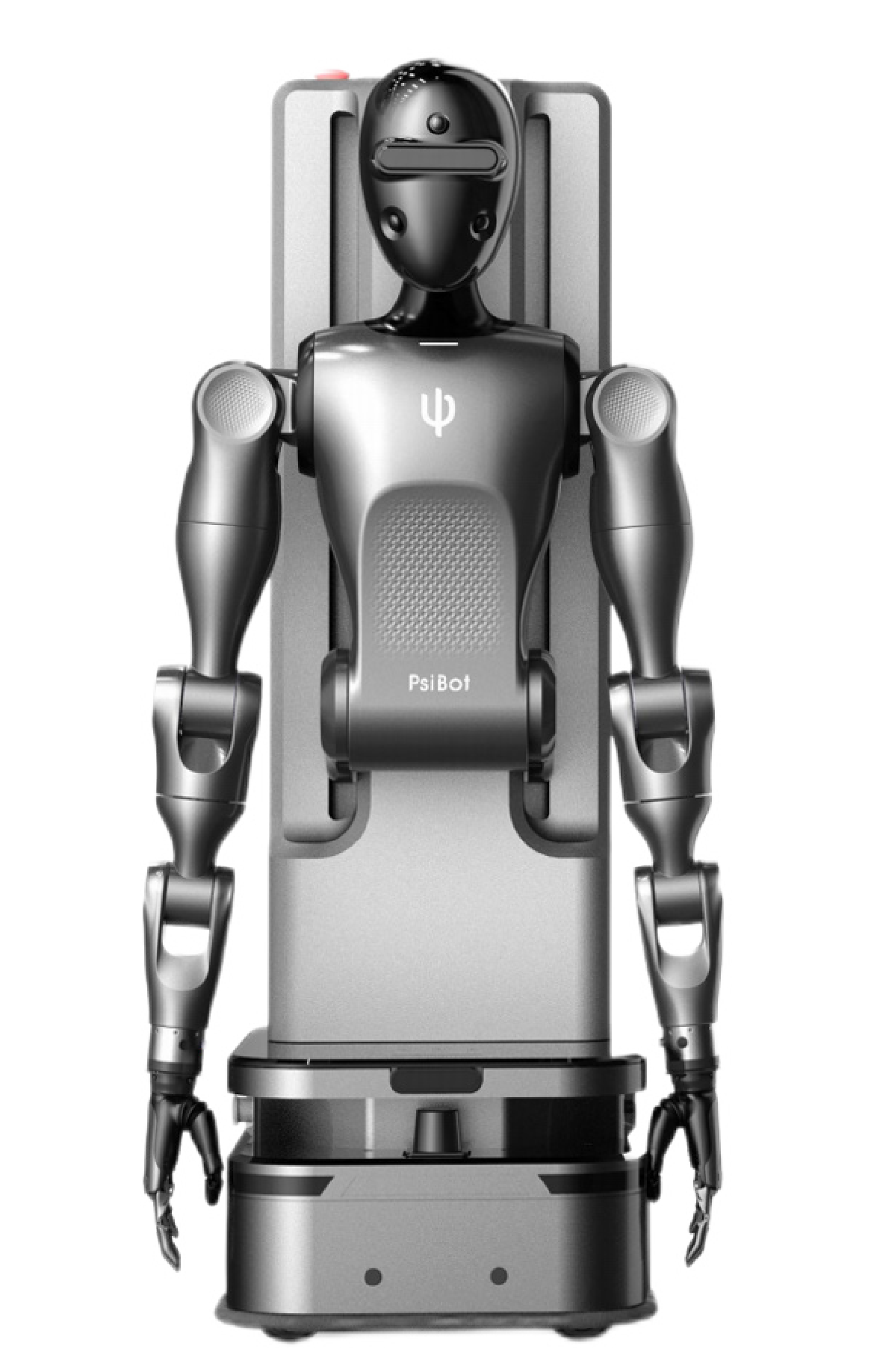
Lingchu AI Raises $274 Million in Series Angel and Pre-A Funding Led by State Backed Funds
Chinese embodied AI startup Lingchu Intelligence has secured a combined 2 billion yuan (approximately $274 million) in its Angel and Pre-A funding rounds, marking one of the largest early-stage investments in China’s robotics sector with strong government backing.
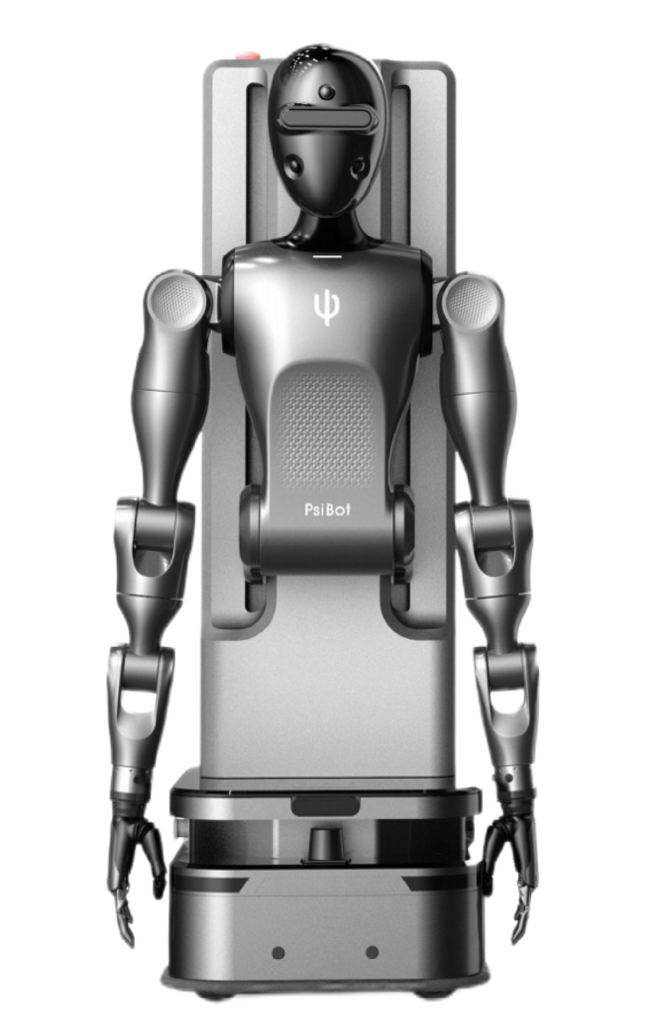
The Angel round was backed by an impressive lineup of state-owned investors including CDB Capital, Guozhong Capital, and CCTV’s Media Industry Fund, alongside strategic corporate investors and funds managed by YUANBIO Capital, Zhuhai Technology Industry Group, and Junshan Investment, among others.
The Pre-A round was led by Shanghai state-owned capital fund Xuhui Capital, with participation from Liangxi Science and Innovation Fund (managed by Bocam), Wuxi Chuangtou, and market-oriented funds including Pufeng Capital and Taiming Capital. Multiple existing shareholders made additional oversubscribed investments. China Renaissance served as the exclusive financial advisor.
Founded in 2024, Lingchu Intelligence brings together a world-class founding team with deep expertise across robotics and AI:
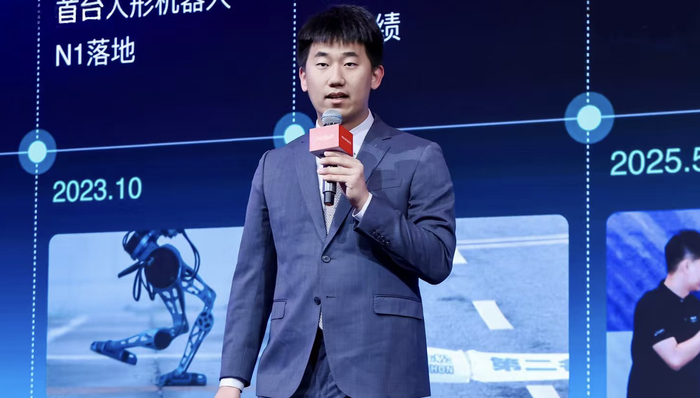
- Dr. Wang Qibin (CEO): Over 20 years of experience in robotics and consumer electronics, having held leadership roles at JD Robotics, Yunji Technology, Lingdong Technology, BlackBerry, and Sonos.
- Chen Yuanpei (Co-founder): A post-00s entrepreneur and visiting scholar at Stanford University mentored by Professor Fei-Fei Li, selected for Huawei’s “Genius Youth” program, with breakthrough achievements in reinforcement learning and dexterous manipulation.
- Dr. Chai Xiaojie (Co-founder): 15+ years in robotics and autonomous driving, previously holding core technical positions at Tencent, Alibaba, and JD.
- Prof. Yang Yaodong (Chief Scientist): Assistant professor at Peking University’s Institute for Artificial Intelligence (Boyuan Scholar), leading the PKU-Lingchu Joint Laboratory for Embodied Dexterous Manipulation.
Lingchu positions itself as a “small full-stack” player, focusing on end-to-end Vision-Language-Action (VLA) models and toolchains rather than full hardware development. Its target scenarios are semi-structured logistics and retail environments—where high-frequency generalization demands meet non-standard manual operations—making them ideal for embodied AI value creation.
Breakthrough: Data Collection at 1/10th the Cost
Lingchu’s proprietary Psi-SynEngine data collection system is a key differentiator. The solution uses exoskeleton tactile gloves with sub-millimeter positioning accuracy to capture full hand/arm freedom and tactile information without disrupting operator workflow.
The system enables collection of high-quality real-world interaction data at a fraction of traditional costs. According to CEO Wang Qibin, the comprehensive collection cost is about one-tenth that of real robot teleoperation solutions. The company plans to launch a portable crowdsourced version to further reduce costs.
Lingchu has already completed small-scale validation in real logistics customer warehouses, achieving measurable efficiency improvements in sorting operations.
Building China’s Largest Dexterous Hand Dataset
By 2025, Lingchu had internally built over 10,000 hours of training data through its Psi-SynNet-v0 dataset. The company aims to exceed 1 million hours by 2026, creating China’s largest dexterous hand dataset and establishing the data foundation for embodied AI commercial applications.
The company has already developed and deployed end-to-end reinforcement learning embodied models including PsiRO, R0.5, and R1, among the first in the industry to achieve long-horizon task execution with generalization, robustness, and dexterity.
This funding round will accelerate Lingchu’s push into large-scale logistics deployment and further development of its data collection infrastructure, positioning the company as a national champion in China’s strategic embodied AI push.
My take
Lingchu represents a different bet in China’s humanoid race. While others chase hardware breakthroughs, Lingchu is doubling down on what may become the industry’s true moat: real-world data. The “data flywheel” strategy—collecting massive human demonstration data at 1/10th the cost, then feeding it back into model training—could create an insurmountable lead if they hit their million-hour dataset target. The state-backing is telling: Beijing is placing strategic bets on embodied AI infrastructure, not just robot hardware. Whether this “small full-stack” approach can scale remains to be seen, but the data-first thesis is compelling.
Tags: Lingchu Intelligence, Funding, Embodied AI, VLA Models, Data Collection, Reinforcement Learning, China Robotics
Category: News