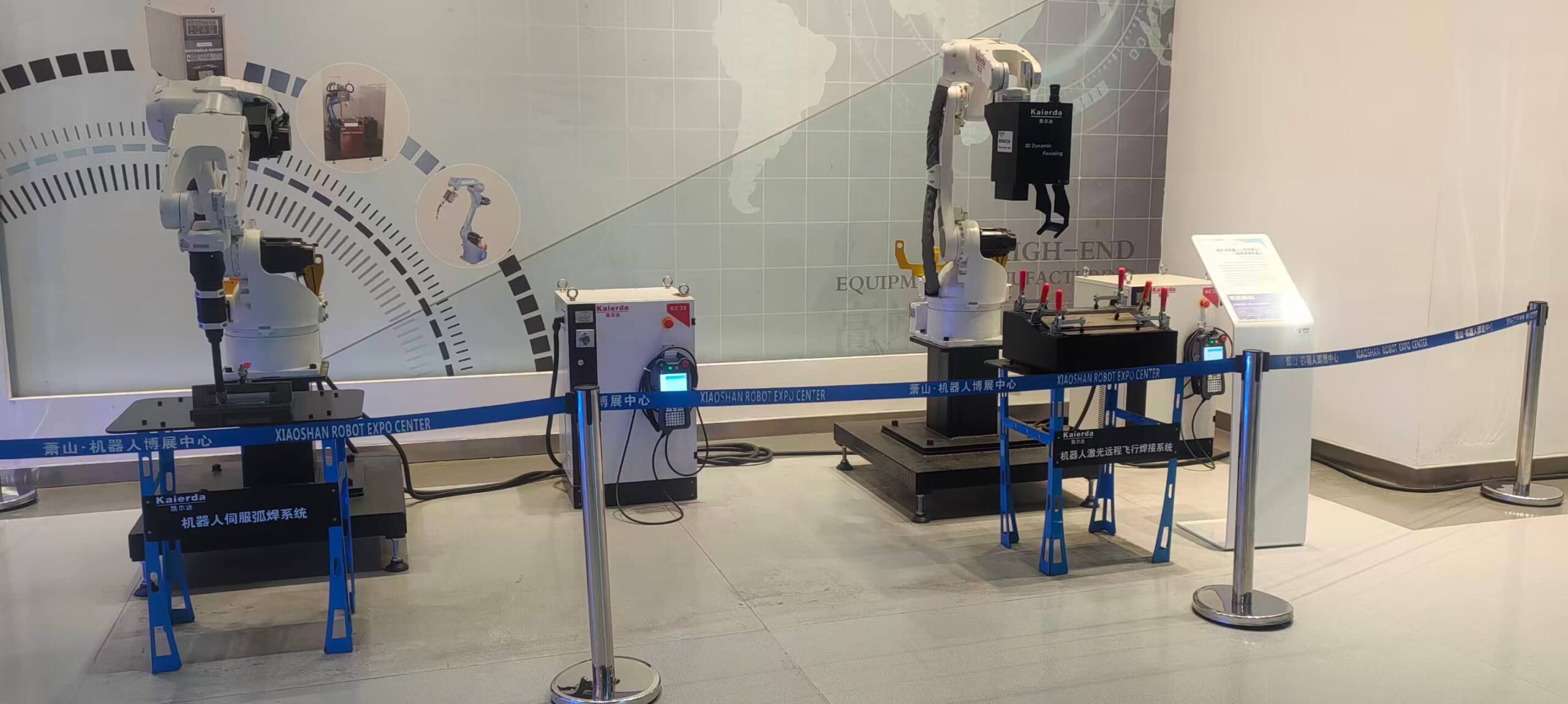
Kaierda Robotics: China’s Welding Robot Pioneer with Yaskawa Backing and Tsinghua Ties
Founded in March 2009, Hangzhou Kaierda Robot Technology Co., Ltd. (Stock Code: 688255) has established itself as a leading player in China’s industrial robotics sector. Headquartered in the Xiaoshan District of Hangzhou—a key hub for the city’s robotics ecosystem—Kaierda is a high-tech enterprise formed as a Sino-foreign joint venture between the Kaierda Group and Yaskawa Electric, combining deep manufacturing heritage with cutting-edge automation technology.
The company is dedicated to industrial robots and welding equipment, with products widely used in industries such as aerospace, vehicles and ships, rail transportation, construction machinery, petrochemicals, metal furniture, hardware products, medical equipment, and fitness equipment.
Strategic Partnership and Financial Highlights
Kaierda was listed on the STAR Market of the Shanghai Stock Exchange (688255.SH). As of 2024, the company reported annual operating revenue of 557 million yuan, with total assets reaching 1.181 billion yuan and a workforce of 477 employees.
Yaskawa Electric (China) Co., Ltd. has long been the company’s second-largest shareholder and a key supplier. In recent years, Kaierda has been accelerating its pace of independent innovation. The proportion of externally purchased robot complete machines used in its welding robot products dropped from 100% before its IPO to 58.88% in the first half of 2025.
Core Products: Advanced Welding Systems with “Ultra-Low Spatter” Technology
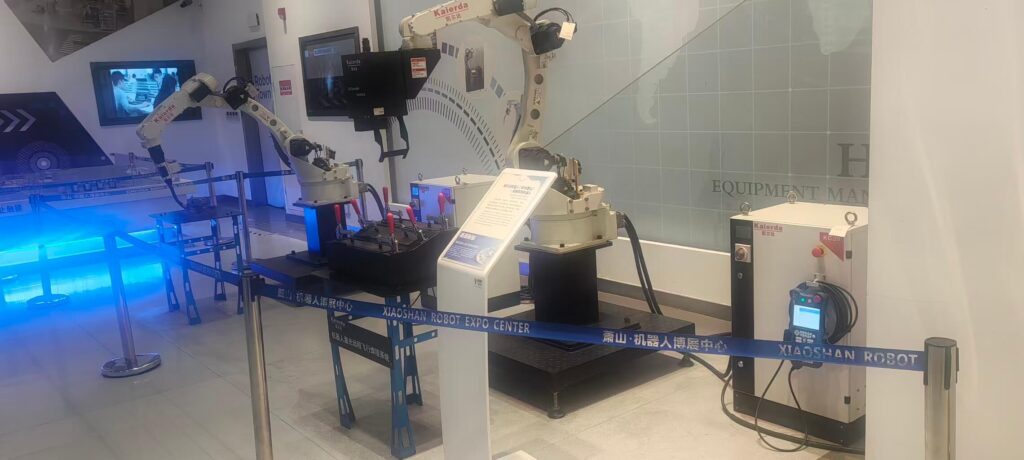
Kaierda’s product portfolio covers a wide range of applications, including arc welding robots, spot welding robots, laser welding/cutting robots, and material handling robots.
Its flagship product, the Ultra-Low Spatter Welding System, is a key highlight. The system precisely controls the entire cycle from arc ignition to droplet formation, achieving ultra-low spatter during short-circuit transfer, reducing spatter to one-tenth of that from ordinary digital welding power sources.
Key technical features include:
- Contact-Retract Arc Ignition: Reduces spatter at arc start and improves ignition success rate.
- Stable Arc Length Control: Full-digital high-speed inverter control quickly adjusts arc and voltage to maintain stability across a wide voltage range.
- Versatile Material Compatibility: An extensive welding expert database supports pulse and short-circuit welding for carbon steel, stainless steel, galvanized sheet, and aluminum alloys, making it ideal for thin-plate sectors like furniture, sheet metal, and electric vehicles.
- Simple Operation: One-touch adjustment simplifies setup, with arc characteristics freely adjustable to meet various welding requirements.
- Digital Communication: Uses Ethernet digital communication with the robot.
Typical specifications for this system include a 6kg payload, 1446mm reach, and a repeatability precision of 0.08mm.
Technological Edge: Servo Welding and Cost-Effective Solutions
As one of the first companies in China to launch servo welding equipment in 2017, Kaierda holds a significant competitive advantage. Its servo welding technology can use CO2 as a shielding gas while achieving results comparable to those obtained with mixed gases, substantially reducing customers’ overall production costs.
Recently, Kaierda has continued to strengthen its intellectual property, receiving new patents for innovations like a “torch cable bundle torsion buffer protection device and welding robot,” further extending its technological lead.
Strong Academic Partnerships: Tsinghua & Harbin Institute of Technology
The company maintains long-term collaborations with prestigious institutions such as Tsinghua University and the Harbin Institute of Technology (HIT). Together with HIT’s State Key Laboratory of Advanced Welding and Joining, Kaierda has established a joint welding robot laboratory. It has also spearheaded key provincial R&D projects in Zhejiang, including the “Arc Welding Robot R&D and Industrialization” project.
Kaierda hosts several provincial-level R&D centers, including the “Kaierda Robotics Provincial Key Enterprise Research Institute” and the “Kaierda Digital Intelligent Welding Technology Provincial High-tech Enterprise R&D Center.”
Intellectual Property and Recognition
Through years of technical accumulation, Kaierda has developed a comprehensive suite of technologies centered on industrial robotics and welding. The company has been granted over 100 patents, including more than 20 invention patents and over 30 utility model patents. It has been consistently recognized as a national high-tech enterprise.
Visit and Experience
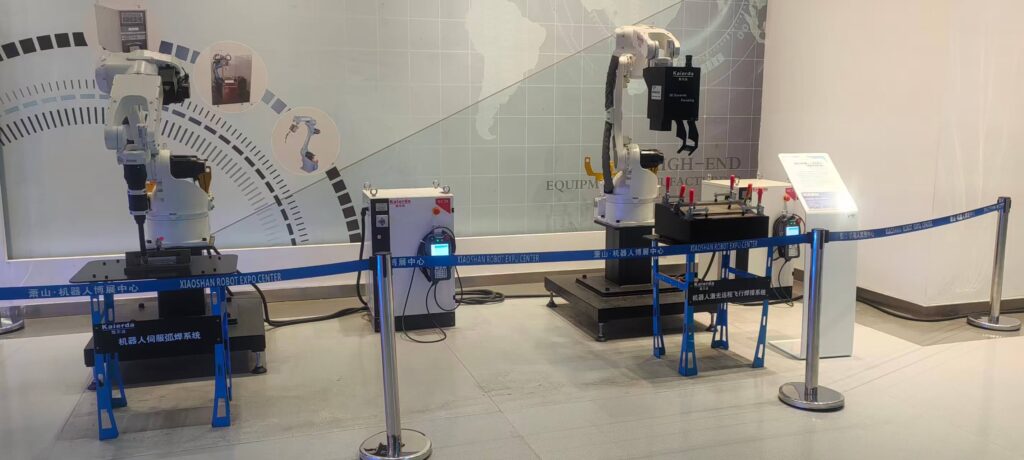
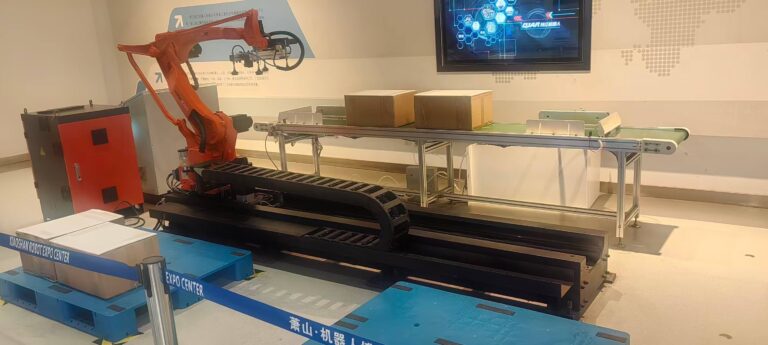
Visitors can see Kaierda’s robots in action at the Xiaoshan Robot Expo Center, a dedicated showcase for Hangzhou’s thriving robotics industry.
My take
Kaierda Robotics exemplifies the quiet strength of China’s industrial robot sector. While media attention often focuses on flashy humanoids, companies like Kaierda are the ones actually transforming manufacturing floors. Backed by Yaskawa’s industrial expertise and deep academic collaborations, they deliver tangible productivity gains—like the 10‑fold reduction in spatter and cycle time improvements. Their strategic shift toward self-developed components, coupled with cost-effective servo welding technology, positions them as a vital player in China’s push toward smart manufacturing and “new quality productivity.”
Tags: Kaierda Robotics, Welding Robots, Industrial Robotics, Yaskawa, Hangzhou Manufacturing, Intelligent Manufacturing
Category: Companies